Algerian Radio









On the eve of the July 2 legislative elections, the Independent National Authority of Elections (ANIE) affirms that all measures are in place to ensure the smooth running of the electoral operation, both on the national territory and abroad.
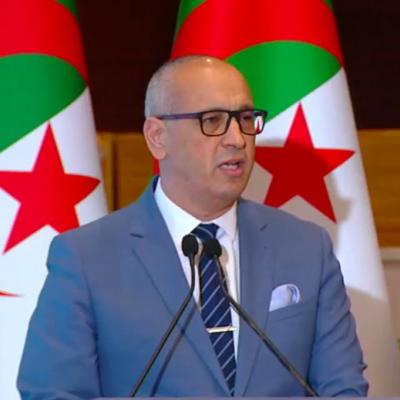
Speaking this Wednesday on the "Guest of the Day" program on Algerian Radio Channel 3, ANIE Acting President Karim Khelfane provided an update on the preparations. He discussed the mobile voting in the Deep South, the voting process for the national community established abroad, the review of the electoral campaign, the monitoring of social media, the transparency of political financing, and the organization of polling day.
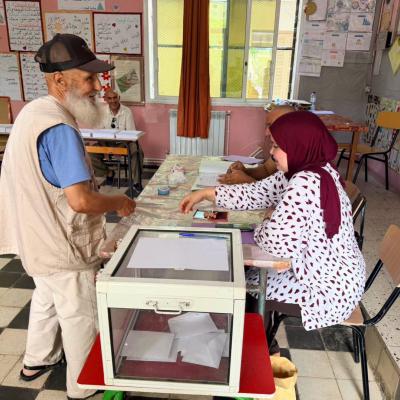
The official first gave an update on the mobile voting dedicated to the nomadic populations of the Deep South wilayas. This operation mobilizes 134 mobile polling stations distributed across 15 wilayas and concerns nearly 31,000 voters. According to him, "significant human and logistical resources have been deployed to guarantee the exercise of the right to vote in these remote regions."
"It is a universal principle to bring the vote closer to the citizen"
"This is an exception where it is no longer the citizen who travels to the ballot box, but the ballot box that goes to meet them. It is a universal principle to bring the vote closer to the citizen, and we go even further by directly reaching our nomadic fellow citizens. It is indeed in these mobile polling stations that we generally record the highest participation rates, sometimes close to 100%," Mr. Khelfane explained.
He specified that "several new polling stations have been opened at the request of the inhabitants and ANIE's local branches, particularly in the new southern wilayas, where teams sometimes travel several hours to reach the voters."
Diaspora voting is proceeding under normal conditions
The Acting President of ANIE also discussed the voting of the national community established abroad, which began five days before the polls opened in Algeria. He recalled that the electoral roll includes 854,285 voters spread across eight constituencies covering Europe, Africa, North America, and the Middle East. This year, the number of seats reserved for the diaspora has increased from eight to twelve.
The operation is taking place in 129 voting centers set up at 122 diplomatic and consular representations, grouping 433 polling stations supervised by more than 3,000 agents.
According to Mr. Khelfane, "the first days of voting took place under normal conditions despite the high temperatures recorded in several countries." He indicated that "the initial participation rates vary between 2% and 7% depending on the zones, while considering these figures encouraging given that the vote extends over six days."
The electoral campaign unfolded in a serene and respectful climate
Addressing the electoral campaign, the ANIE official expressed his satisfaction with its progress, which he said was marked by a serene and respectful climate. He recalled that "the Authority ensured compliance with the provisions of the Constitution and the electoral law, notably the prohibition of hate speech, discrimination, or anything undermining national constants."
"Our objective has never been to hinder political parties or independent lists. We favored an educational approach, drew their attention when necessary, and, in the vast majority of cases, the candidates were very receptive," affirmed Mr. Khelfane, noting that "a few formal notices and referrals to the justice system were initiated in limited cases of overstepping."
The Acting President of ANIE also highlighted that, "despite the airtime made available on national television and radio channels, a large part of the political formations preferred to favor social media, leaving nearly half of the airtime reserved for them at the national level unused." Conversely, local radio stations experienced high demand throughout the campaign.
To regulate activities on digital platforms, ANIE established a committee bringing together magistrates, legal experts, university professors, IT specialists, and journalists to ensure permanent monitoring of the content broadcast and to report any potential infractions.
The fight against corruption and dirty money: A priority enshrined in the Constitution and the electoral law
Regarding campaign financing, Karim Khelfane recalled that "the fight against corruption and dirty money constitutes a priority enshrined in the Constitution and the organic law on the electoral system."
"It is out of the question for dirty money to enter the political arena or influence the will of the voters. Political parties and independent lists are required to justify the origin of their resources and the use of their expenditures. Traceability is a fundamental element," he insisted.
He specified that "the commission in charge of controlling electoral expenditures will continue its work for several months after the final proclamation of the results."
More than 7 million registered voters are aged 25 to 40
The official also highlighted the renewal of the political class through the strong presence of young candidates. More than 7 million registered voters are between the ages of 25 and 40, and the law requires that half of the candidates on the lists belong to this age group. Additionally, more than 2,000 women are candidates, while young people on independent lists can benefit from public assistance intended notably for transport and poster costs.
Karim Khelfane finally assured that "all the institutions concerned, notably the ministries of the Interior, Foreign Affairs, Justice, Communication, Health, as well as the various security corps, are working in permanent coordination with ANIE to ensure the smooth running of the election."
What about polling day?
Regarding polling day, he indicated that "extensions of opening hours may be decided, in accordance with legal provisions, until 8:00 PM when circumstances require it, particularly to allow voters still present in the voting centers to fulfill their electoral duty."
The provisional results will be announced by ANIE within the legal deadline of 72 hours after receiving the last tally sheet. They will then be transmitted to the Constitutional Court, which is solely authorized to announce the final results after examining any potential appeals.
"My final word belongs to the male and female voters who are already expressing themselves through the mobile polling stations and abroad, and who will cast their ballots tomorrow," Mr. Khelfane concluded.