Algerian Radio









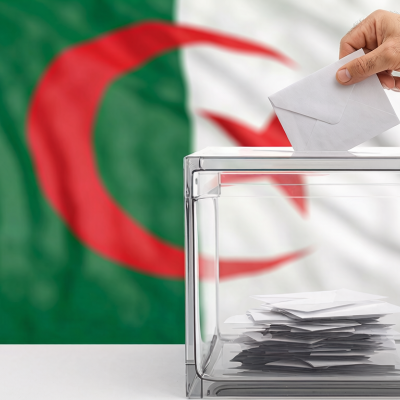
More than 24 million Algerians will head to the ballot boxes this Thursday to elect members of the National People's Assembly for a new parliamentary term, on the occasion of the legislative elections taking place under the slogan "Be an Active Partner in Decision-Making... Vote and Participate."
These elections constitute a pivotal milestone in the process of building state institutions and deepening democratic practice, as they take place within the framework of legal and organizational reforms aimed at regulating the electoral process and ensuring its integrity. They also aim to activate the role of youth and women and enhance participatory democracy.
The Independent National Authority of Elections (ANIE), which oversees all stages of the electoral process, has adopted a working strategy based on expanding the use of digitalization with the aim of modernizing this process, enhancing transparency, and facilitating procedures for citizens. It has created several digital platforms to organize and monitor these legislative elections.
In order to win the 407 seats in the National People's Assembly for a five-year parliamentary term, 793 electoral lists are competing in this national event, comprising 9,854 candidates across various electoral districts nationwide. These include 613 lists sponsored by 32 political parties, one list sponsored by more than one political party (an alliance), and 125 independent lists.
As for the electoral district abroad, 54 lists comprising 432 candidates are competing, including 47 lists sponsored by 16 political parties, one list submitted within the framework of a party alliance, in addition to six independent lists.
The number of female candidates for this election has reached 2,032, which is equivalent to 21 percent of the total number of candidates. Meanwhile, the number of youth under 40 years old has reached 5,304 candidates, representing 54 percent of all candidates. Additionally, 4,673 candidates with a university-level education have been recorded.
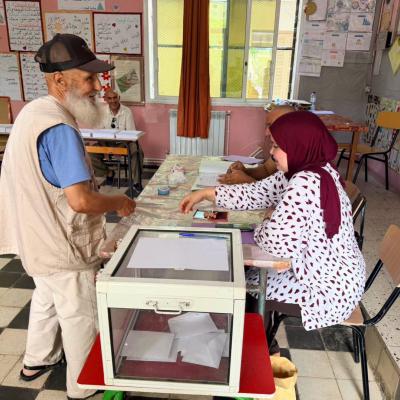
The voting process is conducted using an open-list proportional representation system with preferential voting without mixing (panachage). This takes place across polling stations distributed throughout the national territory and abroad, open from 8:00 AM to 7:00 PM.
This is done by choosing only one list, where the voter casts a ballot for one or more candidates from the selected list within the limit of the number of seats allocated to the electoral district (or geographical zone for the electoral district abroad). The ballot paper is considered void if the votes for the list's candidates exceed the number of seats allocated to the electoral district or geographical zone. However, a ballot paper in which the voter has not expressed a specific candidate preference is considered valid and counts in favor of the selected list as a whole.
Within the framework of applying the provisions of the Organic Law relating to the electoral system, which stipulates the start of voting via mobile polling stations 72 hours before polling day, the voting process via mobile polling stations dedicated to remote areas and nomadic spaces began last Monday.
Members of the national community residing abroad also began the voting process for the legislative elections starting last Saturday.
The electoral campaign for the legislative elections concluded last Sunday, after twenty days of intense competition between officials and representatives of political parties and candidates of independent lists participating in this national event. This campaign took place in a strictly organized atmosphere, under the supervision and management of the Independent National Authority of Elections, with the administration committing to its legal role of providing the material, human, and logistical support to ensure the success of this important event.
It is worth noting that the total electorate has reached 24,727,041 voters, including 23,872,756 voters inside the country and 854,285 voters from the national community residing abroad, according to the results of the recent exceptional revision of the electoral rolls.