Algerian Radio

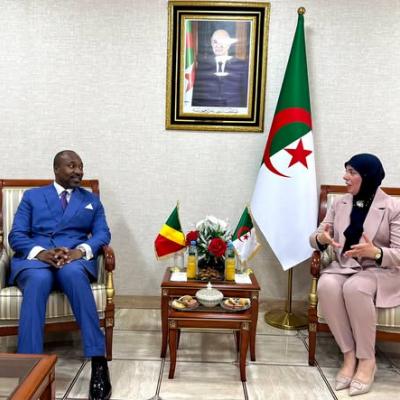
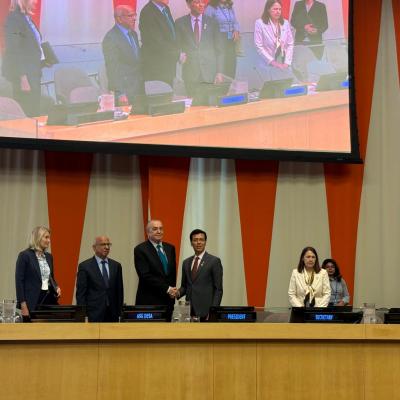
The works of the fourth session of the Algerian-Chadian Joint Intergovernmental Commission concluded today, Tuesday, in Algiers, with the signing of the session's minutes by the Minister of State, Minister of Foreign Affairs, National Community Abroad, and African Affairs, Mr. Ahmed Attaf, alongside the Minister of State, Minister of Foreign Affairs, African Integration, and Chadians Abroad, Mr. Abdoulaye Sabre Fadoul.
Following the signing, Mr. Attaf praised in his closing remarks the “satisfactory and reassuring results” achieved by the ministers in their bilateral meetings, which were translated into sectoral action programs aimed at accelerating the pace of bilateral cooperation and expanding its promising horizons.
He explained that “today’s meetings are an embodiment of the directives of the leaders of our two brotherly countries, President Abdelmadjid Tebboune and his brother, President Marshal Mahamat Idriss Déby Itno,” noting that these directives “aim to impart a renewed momentum to Algerian-Chadian relations, in all their contents and dimensions.”
Mr. Attaf expressed his belief, “with all sincerity and objectivity that we have succeeded to a great extent in completing the task entrusted to us, given the qualitative results yielded by our work today.”
He reviewed the results across three main levels. The first level consists of strengthening the institutional framework for cooperation between the two countries, where it was agreed to reactivate the Joint Committee and establish a bilateral mechanism for political consultations. Added to “these two governmental mechanisms is the Algerian-Chadian Business Council, which was activated yesterday, and which we expect will contribute to developing fruitful and constructive economic partnerships between the economic actors in our two countries,” as stated by the Minister of State.
As for the second level, it relates to enriching the legal framework of Algerian-Chadian relations, both “quantitatively and qualitatively,” according to Mr. Attaf. He revealed that the work allowed for the preparation of 27 new agreements in their final form. These primarily embody the “legal framing of a significant number of important cooperation fields, whether concerning sovereign sectors, economic domains, or fields related to the human dimension of our bilateral relations,” as per the Minister.
The third and final level consists of defining the priorities of bilateral cooperation with full commitment, clarity, and ambition.
Mr. Attaf stated that it was agreed to devote the necessary attention to three pillars.
The first pillar consists of “developing the bilateral partnership in the fields of hydrocarbons, renewable energies, and mining, with a focus on transferring expertise, developing skills, and valuing the natural resources of both countries.” As for the second pillar, it concerns “strengthening the connectivity between the infrastructures of the two countries by enhancing air transport and moving forward with the implementation of major structural projects, primarily the Trans-Saharan Highway and the Trans-Saharan Fiber Optic Backbone.”
In this context, he particularly highlighted the special importance of the Port of Djen Djen (Jijel) as a commercial gateway for the Sahel and Sahara countries, foremost among them the brotherly Republic of Chad.
The third pillar concerns “promoting cooperation in the fields of higher education, scientific research, vocational training, human resource qualification, and health, as well as encouraging media and cultural initiatives aimed at bringing our two peoples closer, and developing the human dimension of Algerian-Chadian relations.”
Mr. Attaf mentioned that all the results are based on “solid' political consensus between the two countries regarding 'the necessity of enhancing regional cooperation in addressing the challenges currently imposing themselves in the Sahel-Saharan region, foremost of which is the scourge of terrorism. . . . and regarding the urgent necessity to revive and reactivate the role of our continental organization and strengthen its efforts aimed at crystallizing African solutions to African problems, away from any foreign interference.”
These consensuses are also based on “the inevitability of rehabilitating the status of international law, the position of the United Nations, and the role of multilateral international action to address the growing challenges currently facing the international arena, and to spare all of humanity from the threats and risks lurking in an international system where there is no prevalence but for force, no rule but for violence, and no arbitration but for control and hegemony,” as he expressed.
For his part, the Chadian Minister noted that “today, we signed the minutes of the session, and tomorrow, a number of agreements and memorandums of understanding will also be signed in many sectors, to crown this event of profound importance for the Republic of Chad and, certainly, for Algeria as well.”
Mr. Abdoulaye Sabre Fadoul added that signing the agreements “does not mean the end of the work; on the contrary, the serious work will begin from the moment these negotiated agreements are signed. Therefore, to embody the agreed-upon projects, this sincere will that we felt here in Algiers must continue and be strengthened to achieve tangible results.”
The Chadian Minister emphasized the importance of each ministerial sector establishing mechanisms for continuous follow-up and permanent communication between the ministers of both countries “to ensure the implementation of projects and agreements.” He added that “the ambition and will of our two Heads of State is to strengthen the historical relations existing between our two countries, and this reinforcement requires tangible projects and precise follow-up.”
He also noted the significant potential available in both countries, such as the immense livestock wealth possessed by Chad. “Consequently, Algeria will not need to import meat from any other country in the future, as we can meet its needs and the needs of the entire region,” he stated.
On the other hand, Mr. Fadoul praised the Algerian expertise, continuing: “There are many Chadian cadres who graduated from Algerian universities and hold important positions today, and this educational cooperation will continue. We also look forward to benefiting from your expertise in the hydrocarbons and mining sectors, as well as in cement and medicines. We emphasize the necessity of completing the Trans-Saharan Highway to connect our countries to global markets.”