Algerian Radio

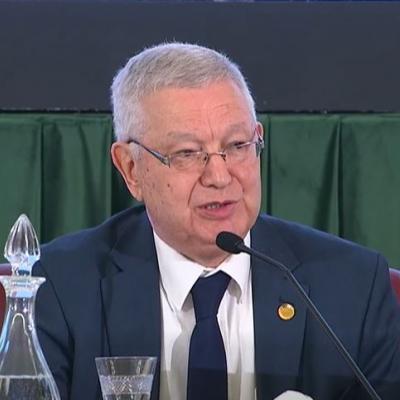
The former president of the African Peer Review Mechanism panel and former executive of the National Enterprise of Petroleum Engineering, Mustapha Mekidèche, spoke this Tuesday about the upcoming launch of the Oued Amizour mine project in the wilaya of Béjaïa.
Speaking on the "L'invité du jour" (Guest of the Day) program on Channel 3 of the Algerian Radio, he immediately pointed out that Algeria has considerable mining potential that has long been under-exploited. According to him, "this project is the result of long-term preparation."
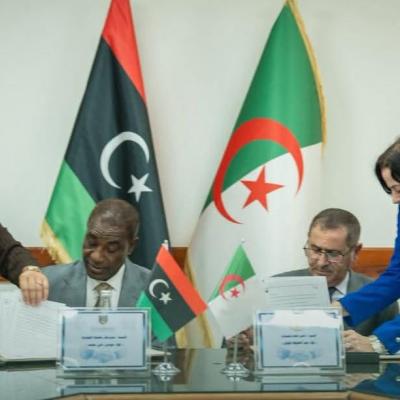
"It is already a long-standing project; we had been preparing the launch of this mining deposit for two years," he explained, specifying that "the contracts were signed in March 2024 with Australian partners for exploitation and Chinese partners for the construction of infrastructure."
The Oued Amizour Deposit as a Major Project for Algeria
He insisted on the complexity of the preparatory phase, particularly regarding social acceptability and local consultation. "We had to build social acceptability with local authorities, associations, and residents," he stressed, also mentioning land issues and the footprint required for the mine, the processing plant, and transport infrastructure.
On a strategic level, Mustapha Mekidèche considers the Oued Amizour deposit to be a major project for Algeria. "It is a massive asset, comparable to the large hydrocarbon deposits," he stated, highlighting the importance of zinc and lead in industrial processes. With reserves estimated at 34 million tons, this project is part of an exploitation plan spanning about twenty years, structured in three phases: "construction, exploitation, and rehabilitation."
He particularly emphasized the final phase. "Site restoration is included in the project from the very beginning; it will take several years and aims to limit environmental impacts," he specified, mentioning the treatment of mining waste and the prevention of nuisances.
A Project That Will Attract Investments
Addressing the economic impact, he estimated that this project will strengthen Algeria's position on the international market. "The further we go, the scarcer mining resources become, and this type of project allows us to strengthen our position and attract investments," he declared, also highlighting the complementarity with other mining projects such as Gara Djebilet.
At the local level, the benefits are significant. "An entire economic microcosm will develop," he explained, evoking the opening up of the region, job creation, and the development of road, rail, and port infrastructure. He also highlighted the importance of training. "Cohorts of young Algerians will be trained in mining professions and will take ownership of the technologies," he indicated.
Reducing Dependence on Hydrocarbons
In a broader perspective, Mustapha Mekidèche placed this project within the national strategy of economic diversification. "Diversification is underway, both downstream with industries and upstream with mining development," he affirmed, estimating that these resources are essential to reduce dependence on hydrocarbons.
Finally, he praised the reforms aimed at improving the investment climate. "The single window facilitates procedures and strengthens the sector's attractiveness," he explained, adding that Sonarem could eventually play a role comparable to that of Sonatrach in its field, including internationally.
Through this project, Algeria thus seems to be initiating, according to him, a new stage in the valorization of its mining resources by combining economic exploitation, territorial development, and environmental requirements.