Algerian Radio


On Monday, the UN issued a strong warning against a global wave of discrimination targeting the world's two billion Muslims, in a world already fractured by wars and political crises.
"We are facing a rise in anti-Muslim intolerance and hatred," lamented UN Secretary-General António Guterres during a General Assembly meeting on the issue, organized to mark the International Day to Combat Islamophobia, celebrated annually on March 15.
This hostility, according to him, takes multiple forms: "Institutional discrimination, socio-economic marginalization, widespread migration restrictions, and unjustified surveillance and profiling." However, he insisted, the most visible violence is only the tip of the iceberg of a more pervasive phenomenon.
"Prejudice can also be subtle," the UN chief warned, citing "quietly denied opportunities, unchallenged assumptions, and questions tinged with suspicion." These are all daily experiences that, when accumulated, "shape entire lives."
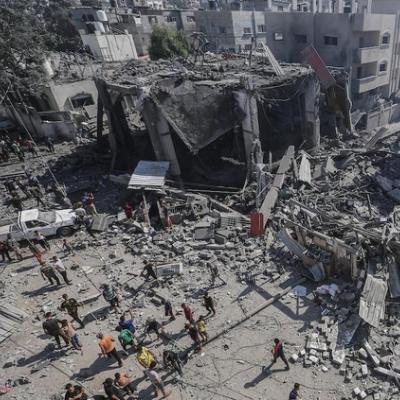
This dynamic is occurring within a particularly volatile international context. The conflicts shaking the Middle East fuel a massive circulation of hostile rhetoric on social media, while certain political narratives contribute to normalizing stereotypes.
The UN High Commissioner for Human Rights, Volker Türk, similarly spoke of a "rising wave" of Islamophobia. "All over the world, acts of harassment, discrimination, and violence targeting Muslims have increased," he stated in a video message.
Muslims "are being attacked in the streets and at school," mosques are being vandalized, and "hateful comments are proliferating on social media," often targeting "women and girls who wear the hijab."
Beyond physical attacks, discrimination infiltrates more ordinary areas of life, such as employment, housing, and access to healthcare. In some countries, the UN official emphasized, these biases can even be "enshrined in law."
He also denounced the misuse of counter-terrorism policies to "monitor and detain Muslims," as well as the systematic profiling of travelers from Muslim-majority countries.
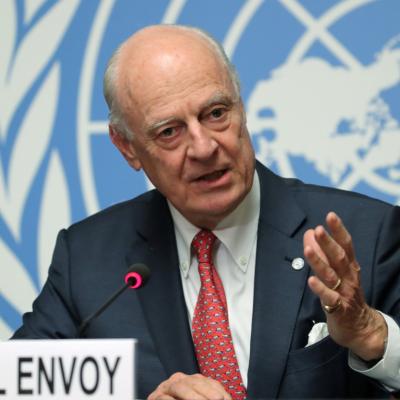
In May 2025, António Guterres appointed Miguel Ángel Moratinos as the Special Envoy tasked with coordinating international action against Islamophobia, a mandate designed to strengthen existing initiatives against hate speech.
For Moratinos, the current dynamic extends far beyond the digital sphere. "The increase in Islamophobic acts in Europe is very, very serious," he told the Assembly. However, according to him, the main danger lies elsewhere: "The most dangerous platform is not the digital one; it is the political one.
These are leaders who encourage their electorate to use social media to insult and spread hatred." The former Spanish minister also pointed to "the deep ignorance that exists in the Western world regarding Islam," a lack of knowledge that fuels fantasies and false conflations.