Algerian Radio

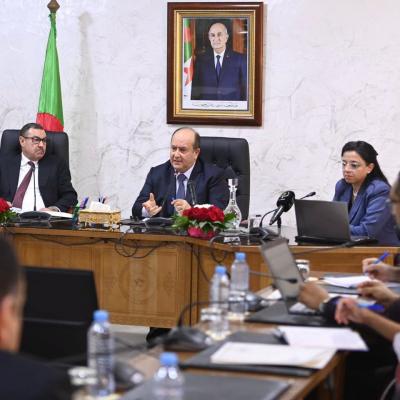
Algeria's experience in the field of investment was reviewed during the second day of the Global Parliamentary Forum of the International Monetary Fund (IMF) and the World Bank (WB) in Washington. Deputies of the People's National Assembly (APN), Youcef Hamidi and Salim Merah, participated in the event, according to a statement from the lower house of Parliament on Wednesday.
During a discussion titled "Investments in Emerging Markets," Mr. Merah presented the Algerian experience to a panel composed of executive directors from the IMF and the World Bank. He specifically referenced the statements made by the Managing Director of the IMF following her recent visit to Algeria and her audience with the President of the Republic, Mr. Abdelmadjid Tebboune.
He highlighted the IMF's observations regarding the "economic progress achieved by Algeria in recent years, following a notable improvement in the business climate thanks to legal reforms related to investment and land, the creation of the Algerian Investment Promotion Agency (AAPI), and advancements in administrative digitalization."
The deputy also noted the "significant rise in non-hydrocarbon exports, alongside a notable economic recovery following the COVID-19 pandemic and a decline in inflation rates."
In his intervention, Mr. Merah discussed the strategic sectors Algeria is prioritizing, such as digital infrastructure, transport, and logistics services—including ports and railways—as well as the energy sector in both its conventional and renewable forms, and the support and development of startups.
On the international stage, Mr. Merah emphasized that "the achievement of international peace and security cannot be dissociated from economic stability," asserting that "the values of religious tolerance and mutual respect between peoples constitute the cornerstone for building a more balanced world."
In this regard, he cited the visit of Pope Leo XIV to Algeria at the invitation of President Abdelmadjid Tebboune, describing it as a "strong message" showing that Algeria, "a land of coexistence, has welcomed various cultures and religions throughout its history and made immeasurable sacrifices for freedom and peace." This, he added, reinforces the idea that peace is built through a culture of acceptance and respect for others, rather than through force.
Regarding the economic dimension, he affirmed that "the realization of true development remains dependent on establishing the foundations of peace, as the end of conflicts will allow resources to be directed toward vital sectors such as education, health, and technology, and will strengthen trust between states to support international trade and economic partnerships."
He further emphasized that Algeria, "with its history of struggle and the sacrifices of its people, offers an inspiring model, having succeeded after the colonial period in building a state working toward the consolidation of internal and regional peace and continually advocating for dialogue over conflict."
After highlighting that the "positive indicators achieved by Algeria reflect solid foundations and promising prospects for diversifying its economy, attracting investment, and creating employment opportunities," Mr. Merah underscored the central role of parliamentarians in accompanying this dynamic through the enactment of investment-incentive legislation, the oversight of public policy implementation, and the strengthening of a climate of trust between various economic actors.