Algerian Radio







The Minister of Agriculture, Rural Development and Fisheries, Yacine Oualid, highlighted today, Tuesday, in Algiers, that the digitalization and modernization of the sector, along with upgrading the management model, are at the core of the ministry's priorities to increase production yields across various branches, particularly the strategic ones.
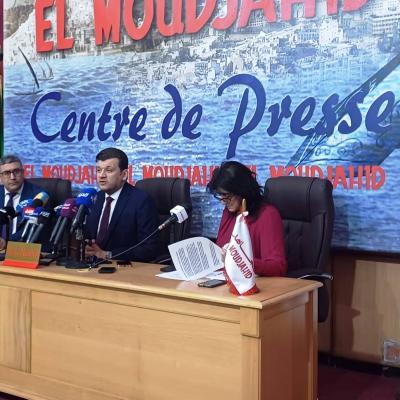
The Minister explained during his appearance as a guest at the El Moudjahid newspaper forum that the sector's strategy is based on several pillars aimed at the optimal and rational utilization of available resources to increase the yield of agricultural and livestock production. This is to be achieved notably through accelerating digitalization, modernizing management and production, generalizing mechanization, updating the legislative and regulatory framework, and localizing the production of seeds and seedlings.
Mr. Oualid pointed out that the digitalization of the sector, particularly through the national information system, will allow for the tracking of production pathways across various agricultural branches to obtain accurate and real-time data and figures. This, he noted, will contribute to implementing the ministry's plans with specific objectives that clear hurdles and improve productivity.
Furthermore, the generalization of mechanization and modern technologies across all production pathways, in implementation of the directives of the President of the Republic, Mr. Abdelmadjid Tebboune, is expected to reduce losses resulting from the harvesting process and ensure an abundant yield per hectare of arable land, with anticipation that the current harvesting season will achieve a "record" level of production.
Furthermore, the localization of seed and seedling production, the development of national production for plant and animal health products, and the capitalization on scientific research results will contribute to reducing the import bill for these inputs as well as production costs, given that inputs account for at least roughly 40% of the total production cost, according to Mr. Oualid.
In this context, the Minister pointed out the pivotal role that the gene bank project—"which is in its final stages of realization"—will play, as it will contribute to protecting national plant and animal genetic resources, thereby helping to increase their yield percentage compared to imported ones.
The sector's strategy is also based on encouraging farmers and breeders to protect livestock and plant wealth through plant and animal health mechanisms, noting that the implemented measures will allow for "a reduction in red meat prices starting from next year."
After reviewing the various challenges facing the agricultural sector—which represents 15% of the country's Gross Domestic Product (GDP)—such as demographic growth and the scarcity of arable land relative to the total land area, the Minister emphasized that the measures introduced in the draft agricultural land law will contribute to expanding the proportion of arable land. He added that the law regulating the issuance of the "farmer's card" will make it possible to direct subsidies toward agricultural production rather than supporting landowners.
On the other hand, Mr. Oualid confirmed that starting today, Tuesday, citizens will be able to access all information and figures regarding the livestock import operation ahead of the blessed Eid al-Adha. This will be available through the "Adahi" platform, which is dedicated to reserving imported livestock.
He explained that a dedicated page will be allocated on the platform, allowing citizens to know, in an updated and accurate manner, the number of imported sheep heads, the ships that transported them, and their routes. He highlighted that registering citizens' orders via the digital platform (adhahi.dz) has ensured greater transparency for the process.