Algerian Radio


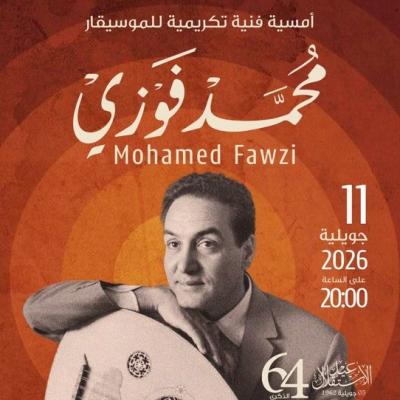
On Saturday evening, the Boualem Bessaih Algiers Opera hosted an artistic evening paying tribute to the great Egyptian musician and artist Mohamed Fawzi (1918–1966), the composer of the Algerian national anthem "Kassaman." The event was held in the presence of the Minister of Culture and Arts, Mrs. Malika Bendouda.
Organized under the patronage of the Ministry of Culture and Arts in cooperation with the Embassy of the Arab Republic of Egypt in Algeria, this evening was part of the celebrations marking the 64th anniversary of Independence Day and the recovery of national sovereignty.
The event brought together the Ambassador of the Arab Republic of Egypt to Algeria, Mr. Abdellatif Ellayeh, as well as the families of the late artist Mohamed Fawzi and the poet Moufdi Zakaria, author of the lyrics to "Kassaman." Both families were honored by the Minister of Culture and Arts, in the presence of the acting manager of the Algiers Opera, Mr. Mourad Senouci, and several senior state officials.
In a speech delivered on this occasion, Mrs. Bendouda emphasized that this tribute represents "a renewal of the commitment to the creators whose names remain closely linked to Algeria's struggle," affirming that "Algeria never forgets those who have offered it a moment of beauty or made a sincere effort."
The Minister also praised what she described as Mohamed Fawzi's "unparalleled genius" in the musical world, highlighting "his artistic talent, which allowed him to seamlessly transition from melodies designed for children, imbued with a keen psychological understanding, to captivating compositions for adult audiences."
Recalling Mohamed Fawzi's composition of the Algerian national anthem "Kassaman," the Minister praised "his genius, put at the service of the honor of the nation's unity, as well as his sincere desire to record the melody and present it swiftly as a contribution to the Algerian Revolution."
She also paid tribute to the genius of Moufdi Zakaria in penning the lyrics, noting that "the alliance between the creativity of Mohamed Fawzi and the genius of Moufdi Zakaria gave birth to an anthem whose echo resonates across the horizons to the rhythm of liberation."
Furthermore, Mrs. Bendouda reaffirmed "Algeria's constant policy of honoring the memory of its friends, from various countries, who stood by its side." She recalled several figures who demonstrated their solidarity with the Algerian cause, including Mohamed Fawzi, whom she described as "symbols of a living human conscience."
For his part, the Ambassador of the Arab Republic of Egypt to Algeria stated that this ceremony "pays tribute to the sacrifices of the martyrs and celebrates a shared musical heritage." He added that this distinction "highlights the historical ties and shared struggles between the Algerian and Egyptian peoples, as well as the role of the arts as a vector of rapprochement and friendship between nations."
Mounir Fawzi, son of the composer Mohamed Fawzi, emphasized that his father was deeply proud to have composed the melody of the Algerian national anthem, which he considered "a symbolic gift in tribute to the struggle of the Algerian people."
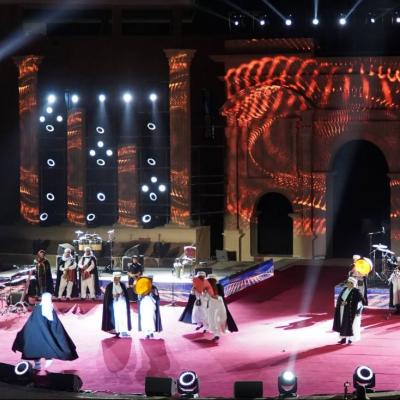
Featuring the Algiers Opera Orchestra, conducted by Maestro Lotfi Saidi, and its choir, led by Zouhir Mazari, the concert opened with the Algerian national anthem "Kassaman." Egyptian singer Walid Haidar and Algerian artist Nada Errihane then performed a selection of songs before a captivated audience. A notable highlight was Dari El Ouyoun Dariha, one of Mohamed Fawzi's masterpieces, which he composed and performed for the first time in 1953 in the Egyptian film Ibn Lil-Ijar.
Among the works performed was also Million Chahid (A Million Martyrs), one of Mohamed Fawzi's compositions most intimately linked to Algeria and its Glorious Revolution. This song, with lyrics written by his compatriot, poet Abdel Fattah Mostafa, was composed and performed for the first time in 1962.
The concert also featured the performance of several revolutionary anthems and songs, including Ya Chahid El Watan, with lyrics by Ibrahim Toukan and Mahmoud Abou El Wafa, set to music by El Amine Bechichi; Min Jibalina Talaa Sawt El Ahrar, written by Mohamed El Aïd Al Khalifa and composed by Mohamed El Hadi Cherif; not to mention Ayma Aazizen Ourtesrou by Farid Ali.
Mohamed Fawzi is considered one of the great figures of Egyptian and Arab music. A talented composer, singer, and actor, he made his mark in Egyptian cinema in the 1940s and 1950s. His repertoire includes over 400 songs, most of which were performed in films, such as Tamalli Fi Qalbi and Elli Yehwak Ahwah. He is also renowned for his children's songs, particularly Mama Zamanha Gaya, which gained widespread fame throughout the Arab world.