Algerian Radio







The Rector of Djamaâ El-Djazaïr (the Great Mosque of Algiers), Sheikh Mohamed El-Maamoun El-Kacimi El-Hassani, emphasized on Sunday in Boussemghoun (the newly created wilaya of El-Abiodh Sidi Cheikh) that the Amazigh manuscript transcribed in Arabic characters represents "a brilliant page in the cultural history of Algeria."
In a speech delivered during the second day of the national symposium entitled "The Amazigh Manuscript Transcribed in Arabic Characters," organized by the High Commission for Amazighity (HCA) in coordination with the local authorities of the wilayas of El-Abiodh Sidi Cheikh and El Bayadh, the Rector of the Great Mosque of Algiers indicated that this manuscript constitutes "a brilliant page in the cultural history of Algeria," where language met the land, where faith mingled with identity, and where local specificity harmonized with the civilizational horizon of the Islamic Ummah.
He recalled that this scientific and cultural event opens broad perspectives for research and reflection on the journey of a nation that recorded its existence in the registers of knowledge and affirmed its presence in the libraries of learning.
He considered that choosing National Book and Library Day to organize this meeting takes on a profound symbolic dimension, insofar as nations are measured by their ability to preserve their memory and safeguard the heritage of their scholars. He stressed that the manuscript constitutes the first image of social memory and the mirror reflecting the transformations of thought and the trajectories of knowledge across generations.
In his intervention, Sheikh Mohamed El-Maamoun El-Kacimi El-Hassani also emphasized that the arrival of Islam in these regions brought a universal humanist message that did not erase linguistic and cultural specificities, but rather elevated them within a common civilizational system.
He explained that the interaction between Islam and Amazigh society gave rise to a historical model combining sincere spiritual belonging and active scientific contribution, making the Amazigh manuscript written in Arabic characters a tangible witness to centuries of intellectual production across different regions of Algeria.
He also revisited the central role played by scholarly zaouias in preserving this heritage, serving as spaces for teaching, copying, and intellectual production, where vast libraries of manuscripts were formed and passed down from generation to generation.
In this context, he praised the efforts deployed by the Algerian State for the protection of tangible and intangible heritage, considering that the safeguarding, digitization, and provision of manuscripts to researchers constitute a strategic choice. This reflects a deep awareness of the fact that national identity is a historical asset to be preserved and promoted.
The Rector of the Great Mosque of Algiers concluded by emphasizing that the attention given to the Amazigh language and its scientific and cultural heritage falls within a comprehensive national vision celebrating the various components of Algerian identity within the framework of its unity and solid constants.
He also called for reviving the role of historic cities such as Boussemghoun, and transforming their manuscript heritage into material for scientific research and a source of cultural creation, in order to ensure the continuity of national memory and its valorization for future generations.
This symposium, held under the slogan "The Amazigh Manuscript: Ink of Identity and Memory of History," is marked by the participation of numerous academics and researchers, as well as representatives of national laboratories and research institutions, owners of manuscript libraries, and sheikhs of zaouias. Additionally, national associations focusing on heritage and culture from different wilayas of the country are in attendance.
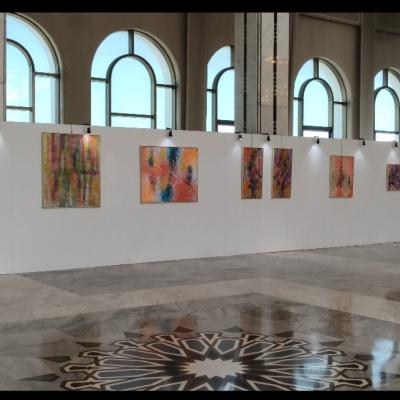
The event's program includes, in addition to scientific conferences, the organization of various exhibitions highlighting the richness and diversity of Algerian cultural heritage, thereby reflecting its historical depth and the extent of its roots in human civilization.