Algerian Radio


The draft technical amendment to the Constitution is not "a comprehensive overhaul" but rather "a targeted adjustment." This was stated on Wednesday by Professor Tahar Eddine Ammari, a lecturer at the Faculty of Law and Political Sciences in Tizi Ouzou and an attorney admitted to the Supreme Court and the Council of State.
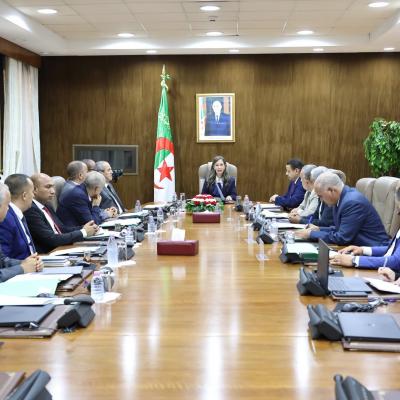
Speaking on the "L'invité du jour" (Guest of the Day) program on Algerian Radio's Channel 3, Mr. Ammari shed light on the scope of these modifications, as Parliament convenes this Wednesday with both its chambers at the Palais des Nations to examine and vote on the draft technical amendment to the Constitution.
Adapting Certain Rules to the Actual Functioning of Institutions
From the outset, he clarified that "this is a technical adjustment of certain provisions," noting that the changes primarily affect the Presidency of the Republic, the Parliament, and the judiciary. He recalled that twelve points were retained during a preliminary meeting, reflecting a desire to adapt certain rules to the actual functioning of institutions.
Among the new features affecting the presidential office, the introduction of a university degree requirement for candidates marks a notable evolution. "There is this technical provision that requires the candidate to have a university-level education," stated Professor Ammari, while specifying that the details will be determined later by the electoral law.
Another modification concerns the swearing-in ceremony, which is now explicitly inscribed in the Constitution. "The taking of the oath will be done before Parliament with its two chambers," he affirmed, putting an end to a practice that until now had relied solely on tradition.
Expanding the Prerogatives of the Head of State
The text also plans to expand the prerogatives of the Head of State by allowing him to call early local elections. "It is perfectly normal for him to have this prerogative," Mr. Ammari assessed, mentioning the deadlocks observed at the local level and the need to guarantee institutional continuity, particularly in the context of territorial reorganization and an increase in the number of wilayas.
Avoiding Institutional Vacuums
On the legislative front, the reform introduces changes regarding the Council of the Nation. Its president's term would be extended from three to six years to avoid an institutional vacuum in the event of a vacancy in the Presidency of the Republic. "The mandate must be extended precisely to prevent this situation," the professor explained. Furthermore, the representation of wilayas could be adjusted based on their demographic weight. "There will be wilayas that will have one representative and others that will have two," he specified, while maintaining a ceiling of two seats.
Redefining the Missions of ANIE
Regarding the National Independent Election Authority (ANIE), the amendments aim to redefine its missions. The material organization of elections would be entrusted to the administration, while the Authority would retain a supervisory role. "The responsibility is to monitor the conduct of the elections," insisted Mr. Ammari, adding that this distribution of tasks would make it possible to learn from past difficulties.
Better Managing Disagreements Between the Two Chambers of Parliament
Finally, adjustments are planned to better manage disagreements between the two chambers of Parliament. "This provision will help resolve certain deadlocks," he noted, referring to the revision of conciliation mechanisms. An overhaul of the High Judicial Council is also being considered, in line with adapting the judicial system.