Algerian Radio










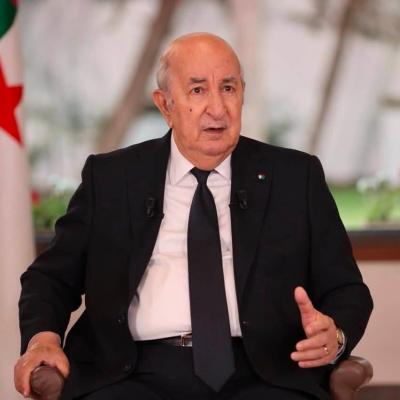
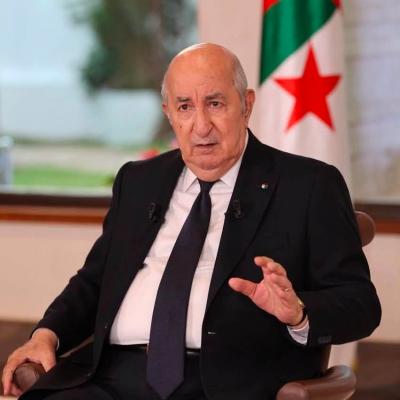
The President of the Republic of Algeria, Mr. Abdelmadjid Tebboune, highlighted the development taking place in Algeria's durum wheat sector, where self-sufficiency is expected to be achieved during the current agricultural season.
During his periodic interview with representatives of the national media, broadcast yesterday evening (Monday) across national television and radio channels, the President described achieving this outcome as a "miracle," pointing to a set of positive factors that contributed to boosting national production, led by changes in technical practices and favorable rainfall levels.
In addition to reducing the durum wheat import bill by more than $1.5 billion, achieving self-sufficiency reinforces "national pride" and embodies Algeria's efforts toward food sovereignty, the President stated.
In this context, the President referred to the "quantum leap" experienced by the agricultural sector in general, noting that its products are now widely sought after abroad after "we were importing onions, garlic, and potatoes ten years ago." He added that "the achieved results came thanks to an economic environment that provided the factors for success, such as electrical grid connections."
The sector is heading toward achieving self-sufficiency in most of its agricultural branches, with the exception of the livestock/meat sector, which "continues to suffer from speculation," according to the President, who affirmed that the State will decisively address this issue.
Near $30 Billion in Non-Hydrocarbon Exports Targeted by 2029–2030
Outside the agricultural sector, the President recalled that the oil refining sector achieved self-sufficiency in fuel production (gasoline and kerosene) in 2022 and began exporting, noting that exports from this sector will grow significantly once the Hassi Messaoud refinery enters service.
Likewise, the industrial sector is moving toward self-sufficiency across several branches, such as household appliances and electrical equipment, with substantial export potential, the President added. He noted that economic operators, through the Algerian Economic Renewal Council (CREA), have committed to achieving around $30 billion in non-hydrocarbon exports by 2029–2030, matching traditional oil revenues.
Touching upon major structural economic projects, the President stressed the significance of the Algiers–Tamanrasset railway project, which is now moving into a "maximum speed implementation phase." He recalled its benefits, including facilitating mobility, reducing freight costs, redistributing the population, improving urban planning, and exploiting resources in remote regions.
The project is expected to be delivered in 2028, according to the President, who explained that this rail line will allow Algeria to reinforce its leading role in driving African integration.
Regarding Algeria's strategy to achieve water security, the President explained that efforts are ongoing to secure drinking water supplies and combat rainfall scarcity through accelerating the seawater desalination plant program along the coastline. This strategy will position Algeria as a global leader in the field, with coverage reaching 62% of total consumption by 2029.
Improving Business Climate and Removal from the FATF Grey List a Major Gain
Addressing efforts to improve the business climate in Algeria, the President highlighted the crucial role played by the "Single Window," which saves investors time and effort while avoiding bureaucratic hurdles, emphasizing the need for the banking sector to keep pace with these transformations.
In a related context, the President considered Algeria's removal from the Financial Action Task Force (FATF) grey list an "important achievement" and the fruit of immense efforts across multiple fronts. This milestone will help attract new investments, strengthen investor confidence, and ensure transaction transparency.
Regarding measures to protect purchasing power, the President confirmed that actions taken—including protecting and promoting local products and boosting non-hydrocarbon exports—have led to better control over inflation rates. Inflation dropped "significantly" to 2% in 2026, down from over 11% in previous years.