Algerian Radio






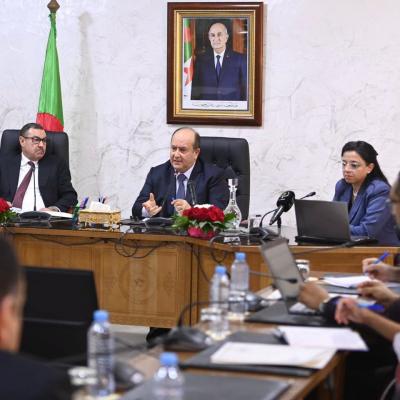
The Minister of Energy and Renewable Energies, Mourad Adjal, presided this Monday in Algiers over the installation of the members of the Intersectoral Joint Committee for Energy Control. This committee is tasked with defining the framework for sustainable energy governance leading up to 2035 by strengthening national energy control policies, rationalizing consumption, and improving energy efficiency to ensure the preservation of national resources.
During the installation ceremony, held in the presence of several government members and representatives of sectoral bodies, national companies, and institutions from various sectors, Mr. Adjal explained that the establishment of this body is a significant step for the sector. He emphasized that this advisory body serves as a starting point for a new dynamic in building modern, participatory, and effective energy governance.
He noted that the committee is characterized by its broad representation, including a majority of ministerial sectors and major national institutions such as the Sonatrach and Sonelgaz groups, as well as public companies, the Electricity and Gas Regulatory Commission (CREG), standardization bodies, agencies under the energy sector, universities, higher schools, research centers, and representatives of civil society.
Mr. Adjal added that the committee will oversee the support of energy control by relying on the rationalization of consumption and the improvement of energy efficiency while promoting renewable energies. He highlighted that it will begin its duties by studying two primary files submitted by the ministry: enriching the draft National Energy Control Strategy for 2035 and examining the National Energy Control Program for the period between 2026 and 2035.
For his part, the Minister of State, Minister of Hydrocarbons, Mohamed Arkab, emphasized that energy control and the enhancement of energy efficiency are among the most prominent strategic challenges facing Algeria. This comes in light of the continuous rise in national demand, which must be met with the necessity of preserving national hydrocarbon resources, alongside the requirements of the energy transition and the reduction of the carbon footprint.
In this context, Mr. Arkab reviewed the hydrocarbon sector's vision for rational energy control within industrial facilities and the adoption of a more efficient energy model aimed at reducing the self-consumption of oil and gas sites.
The Minister also pointed to the "ambitious program to equip Sonatrach sites with solar energy with a capacity of 1.3 GW by 2030," through the completion of the first 10 MW photovoltaic plant in the "Bir Rebaa North" (BRN) area and the launch of a second plant project (BRN 2) with the same capacity.
He added that preparations are also underway to generalize these plants in the medium term at major strategic sites including Tin Fouyé Tabankort (TFT), Rhourde Nouss, Ohanet, Ledjmet, and El Borma. He stressed that energy efficiency will free up significant quantities of hydrocarbons for export or industrial valuation, ensuring the sustainability of Algeria's position as a reliable and globally competitive energy supplier.
Regarding clean energies, Mr. Arkab affirmed that Algeria seeks to be a major regional player through the implementation of the Green Hydrogen Strategy. He recalled that current international partnerships aim to reach export capacities ranging between 30 and 40 TWh in the form of gaseous hydrogen, liquid hydrogen, and/or its derivatives by 2040. This will open promising prospects for reducing dependence on traditional sources, lowering the carbon footprint, and achieving sustainable development.
In turn, the Minister of Industry, Yahia Bachir, stressed the importance of the committee, which represents an essential building block in the institutional structure aimed at establishing an effective national policy for energy control and improving energy efficiency across various sectors of activity by rationalizing energy use and developing technical solutions capable of integrating renewable energies.
Mr. Bachir also highlighted that his ministerial department is currently working to contribute effectively to reaching these national goals, particularly by mobilizing the means and capabilities to achieve energy efficiency. He pointed to the creation of the "Electrical Industries Cluster," aimed at advancing promising industrial branches such as the manufacturing of equipment for electricity production from renewable sources.
In the same vein, the Minister of Environment and Quality of Life, Kaouter Krikou, emphasized the role played by her sector in supporting the national effort for energy control, stressing the necessity of establishing an integrated framework that links environmental and energy policies.
She explained that the ministry is working according to a "balanced equation that achieves sustainable development goals," in line with national and international commitments, particularly in the field of combating climate change. She highlighted that the sector's strategy is based on "enhancing the transition toward sustainable production and consumption patterns, supporting renewable energies, in addition to reducing emissions and the carbon footprint."